


SMARTWIZ
SMARTWIZ
SMARTWIZ
January - February 2026
Fintech, AI, web app, Chrome extension
Product Designer

The Case Study in a Mighty Bento
The Case Study in a Mighty Bento
Because not everybody has time to read through the whole thing... Here’s the project in a bento.
Because not everybody has time to read through the whole thing... Here’s the project in a bento.
The Solution
A guided onboarding experience built for older, less tech-savvy users who needed direct guidance every step of the way, driving a 30% increase in adoption
The Solution
A guided onboarding experience built for older, less tech-savvy users who needed direct guidance every step of the way, driving a 30% increase in adoption
The Solution
A guided onboarding experience built for older, less tech-savvy users who needed direct guidance every step of the way, driving a 30% increase in adoption

New Tool for an Old-School Industry
For tax professionals who've spent decades working with tested and proven systems, the jump to an AI-powered SaaS tool is hard to get over, especially when a confusing first experience is often a permanent last one.
For tax professionals who've spent decades working with tested and proven systems, the jump to an AI-powered SaaS tool is hard to get over, especially when a confusing first experience is often a permanent last one.
Identifying the challenge
Identifying the challenge

Low Numbers Told a Bigger Story
Low Numbers Told a Bigger Story
Despite strong core functionality, SmartWiz was seeing low adoption rates and a growing volume of support tickets. Users weren't complaining about what the product did, they were struggling to get started in the first place. Drop-off was happening at the very beginning of the journey.
Despite strong core functionality, SmartWiz was seeing low adoption rates and a growing volume of support tickets. Users weren't complaining about what the product did, they were struggling to get started in the first place. Drop-off was happening at the very beginning of the journey.
Conducting research
Conducting research

Getting to the Root
Getting to the Root
To understand why users were dropping off, we conducted one-on-one check-ins with a cross-section of SmartWiz's existing user base. The goal was to hear directly from the people who had logged in, gotten stuck, and quietly stopped coming back. What came out of those conversations was consistent: users knew what SmartWiz does. They were confused about where to begin.
To understand why users were dropping off, we conducted one-on-one check-ins with a cross-section of SmartWiz's existing user base. The goal was to hear directly from the people who had logged in, gotten stuck, and quietly stopped coming back. What came out of those conversations was consistent: users knew what SmartWiz does. They were confused about where to begin.
Our usage data also revealed a consistent pattern: users were logging in, getting stuck, and not coming back. The product had real value, but without a clear path forward, that value was invisible to the people who needed it most.
Our usage data also revealed a consistent pattern: users were logging in, getting stuck, and not coming back. The product had real value, but without a clear path forward, that value was invisible to the people who needed it most.
Insights from Interviews and Research
Insights from Interviews and Research
Based on the information gathered through interviews and research, the main design challenges are the following:

Users had no context going in
Users had no context going in
There was no moment in the existing experience that answered the most basic question: what is this, and how does it work? Users arrived at the dashboard carrying assumptions, gaps, and uncertainty and the product never corrected any of it before asking them to get started.

Onboarding that didn't connect the dots
The existing onboarding introduced features one at a time, in separate flows. The result was users who knew how to use individual parts of the product but had no sense of how everything fit together.

Disengaged before reaching the value
Most users never made it to the moment where SmartWiz clicked. The onboarding experience wasn't moving them toward value quickly enough.
Users had no context going in
There was no moment in the existing experience that answered the most basic question: what is this, and how does it work? Users arrived at the dashboard carrying assumptions, gaps, and uncertainty and the product never corrected any of it before asking them to get started.
Onboarding that didn't connect the dots
The existing onboarding introduced features one at a time, in separate flows. The result was users who knew how to use individual parts of the product but had no sense of how everything fit together.
Disengaged before reaching the value
Most users never made it to the moment where SmartWiz clicked. The onboarding experience wasn't moving them toward value quickly enough.
Analysis and planning
Analysis and planning

Let Your Users Be Known
Let Your Users Be Known
To design an onboarding experience that would actually work for SmartWiz's audience, it was critical to understand exactly who we were designing for and empathize with their relationship to technology.
User Personas
User Personas
User Personas
I present our user personas from the research and interviews: Carol and David

Carol, 48
Carol is a seasoned tax professional with her own solo firm.She knows tax law inside and out but she has always wanted to use tools that she knows are proven and tested. New software isn't something she seeks out.
Carol's Needs: Carol needs the product to speak her language plain, direct, and free of tech jargon. She needs to feel like she's being walked through something, not thrown into it.
Crafting Solutions: Onboarding should feel less like software setup and more like someone sitting next to her and walking her through it.

Mark, 34
Mark is a tax professional working for a small firm. He heard about SmartWiz from a colleague who wouldn't stop talking about it. He's open to trying it, but the first experience needs to match his expectations.
Mark's Needs: Mark needs the product to deliver on the promise quickly. The onboarding experience needs to confirm that the recommendation was worth it.
Crafting Solutions: The onboarding process can't afford to be slow or confusing. For a referral user, friction in the first session doesn't just lose a user, it undermines the trust of the person who sent them.
Carol, 48
Carol is a seasoned tax professional with her own solo firm.She knows tax law inside and out but she has always wanted to use tools that she knows are proven and tested. New software isn't something she seeks out.
Carol's Needs: Carol needs the product to speak her language plain, direct, and free of tech jargon. She needs to feel like she's being walked through something, not thrown into it.
Crafting Solutions: Onboarding should feel less like software setup and more like someone sitting next to her and walking her through it.
Mark, 34
Mark is a tax professional working for a small firm. He heard about SmartWiz from a colleague who wouldn't stop talking about it. He's open to trying it, but the first experience needs to match his expectations.
Mark's Needs: Mark needs the product to deliver on the promise quickly. The onboarding experience needs to confirm that the recommendation was worth it.
Crafting Solutions: The onboarding process can't afford to be slow or confusing. For a referral user, friction in the first session doesn't just lose a user, it undermines the trust of the person who sent them.
User Flow
User Flow
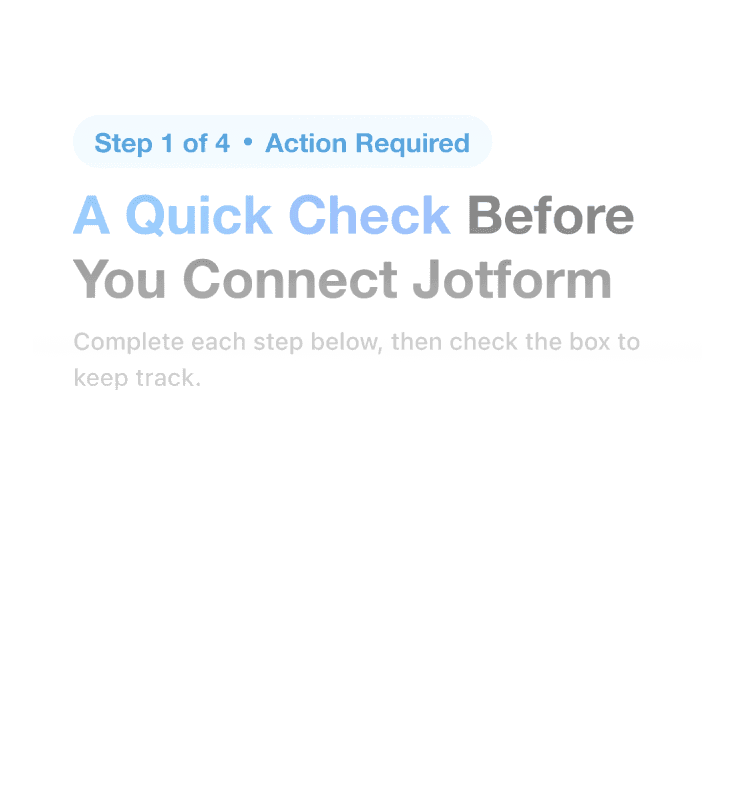
Before designing any screens, I mapped out every step a new user would take from first login to first completed task, identifying exactly where confusion was likely to occur and where the biggest drop-off risks lived.
Design
Design

From Insight to Ideation
From Insight to Ideation
After gaining key insights, brainstorming sessions were conducted to come up with design solutions.
Sketches
Sketches
Sketches
Because users were often working under time pressure with zero tolerance for confusion, early sketches focused on clarity over completeness. The guiding question throughout was: what's the minimum a user needs to see to feel confident taking the next step?
Mid-fidelity wireframes
Mid-fidelity wireframes
Mid-fidelity wireframes
Mid-fidelity wireframes gave form to the ideas from the sketching phase, allowing for early validation of the flow structure before investing in high-fidelity design.
Designing Solutions to Make Impact
Designing Solutions to Make Impact
With Carol and David in mind, these design experiences were crafted to directly address the drop-off and confusion that was keeping SmartWiz's user base from getting started:
Users had no context going in
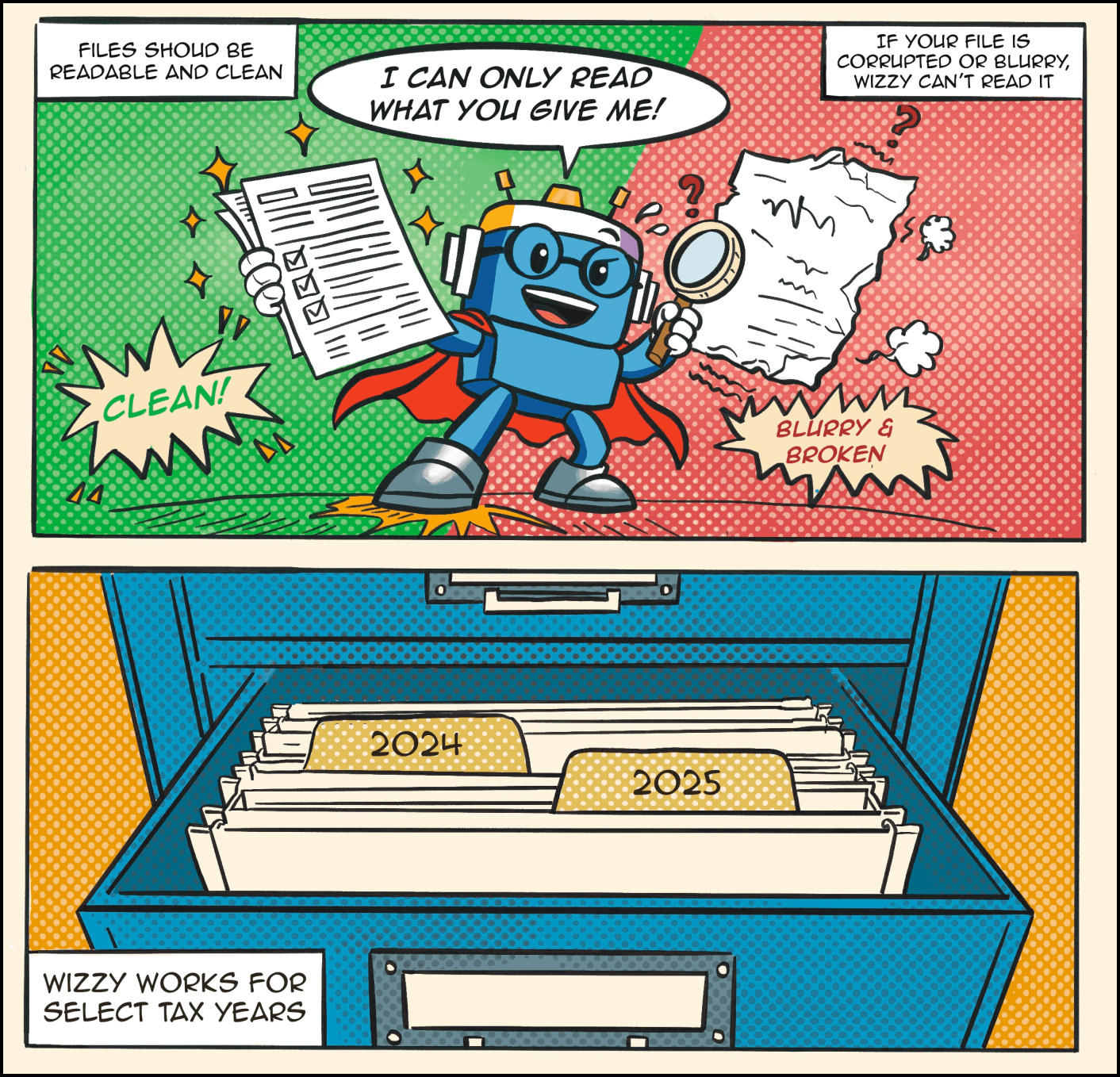
SOLUTION
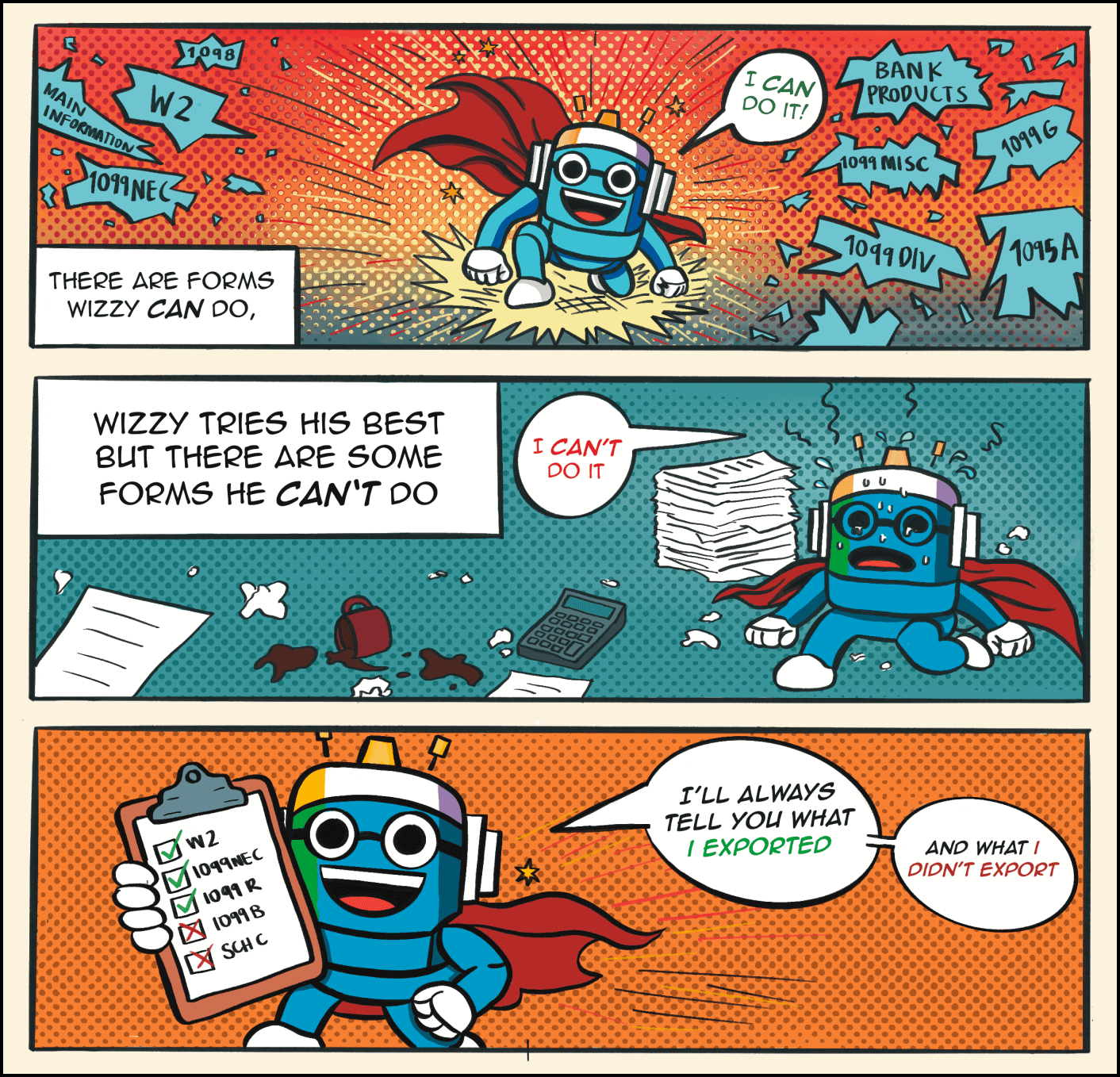
Setting expectations through illustration
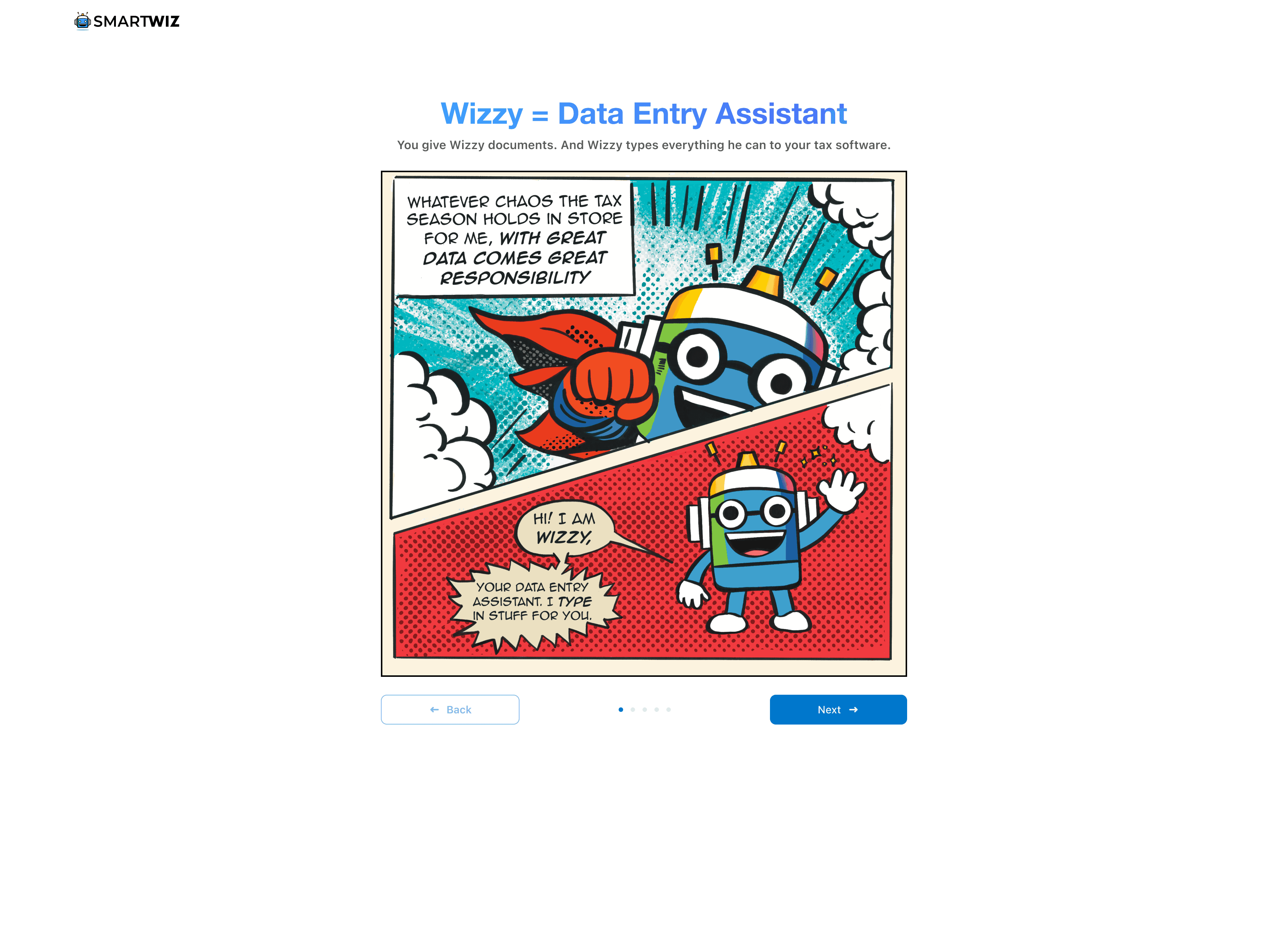
I designed a comic strip sequence that walked users through what SmartWiz does and doesn't do in plain language, with illustration, before anything else. For a user base that found dense interfaces intimidating, a visual story was a far easier entry point than a feature checklist.
How it will help Carol and Mark: For Carol, this moment replaces the anxiety of "I don't know what I'm doing" with "okay, I understand what this is." For Mark, it validates the recommendation that got him here. Both users move into onboarding with context they didn't have before.
Users had no context going in
SOLUTION
Setting expectations through illustration
I designed a comic strip sequence that walked users through what SmartWiz does and doesn't do in plain language, with illustration, before anything else. For a user base that found dense interfaces intimidating, a visual story was a far easier entry point than a feature checklist.
How it will help Carol and Mark: For Carol, this moment replaces the anxiety of "I don't know what I'm doing" with "okay, I understand what this is." For Mark, it validates the recommendation that got him here. Both users move into onboarding with context they didn't have before.
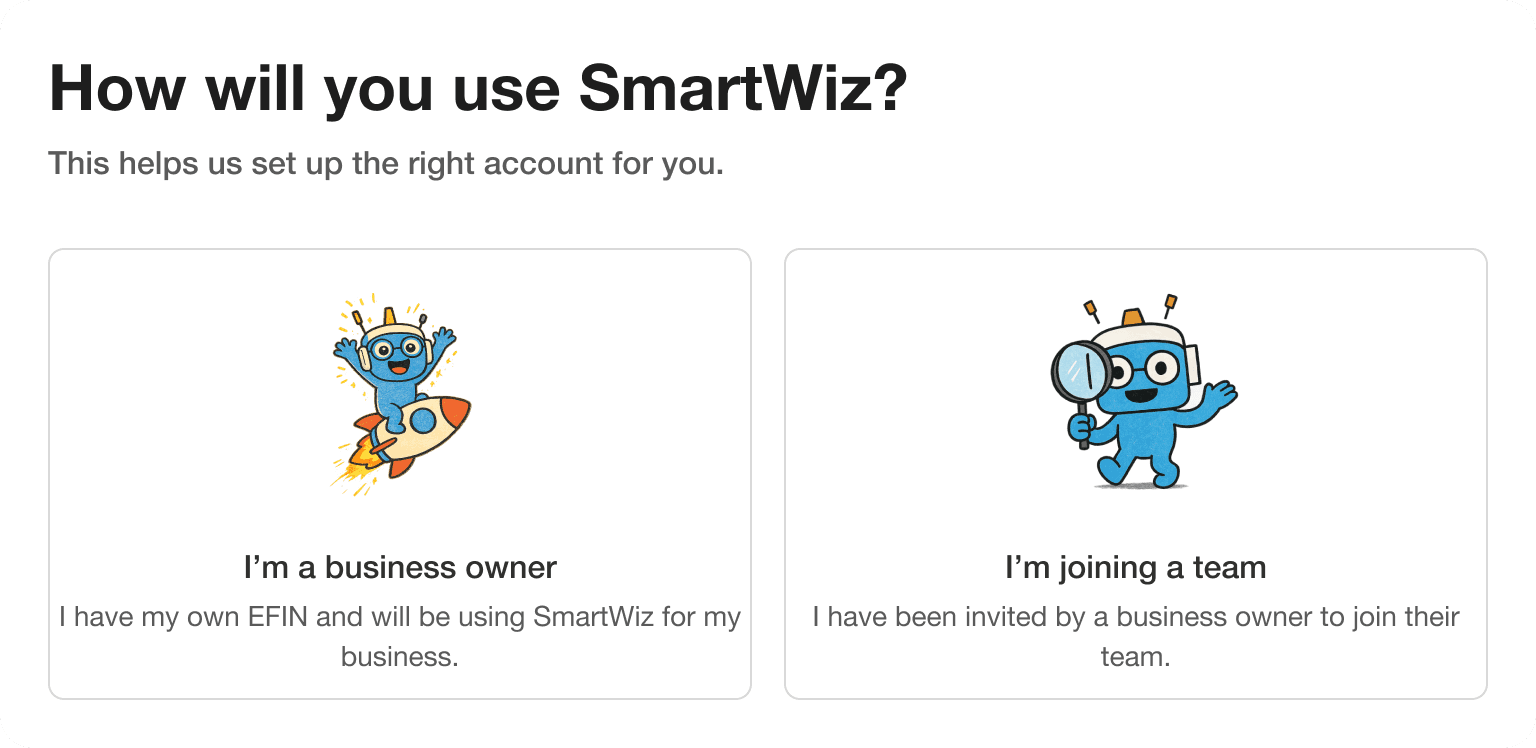
Onboarding that didn't connect the dots
SOLUTION
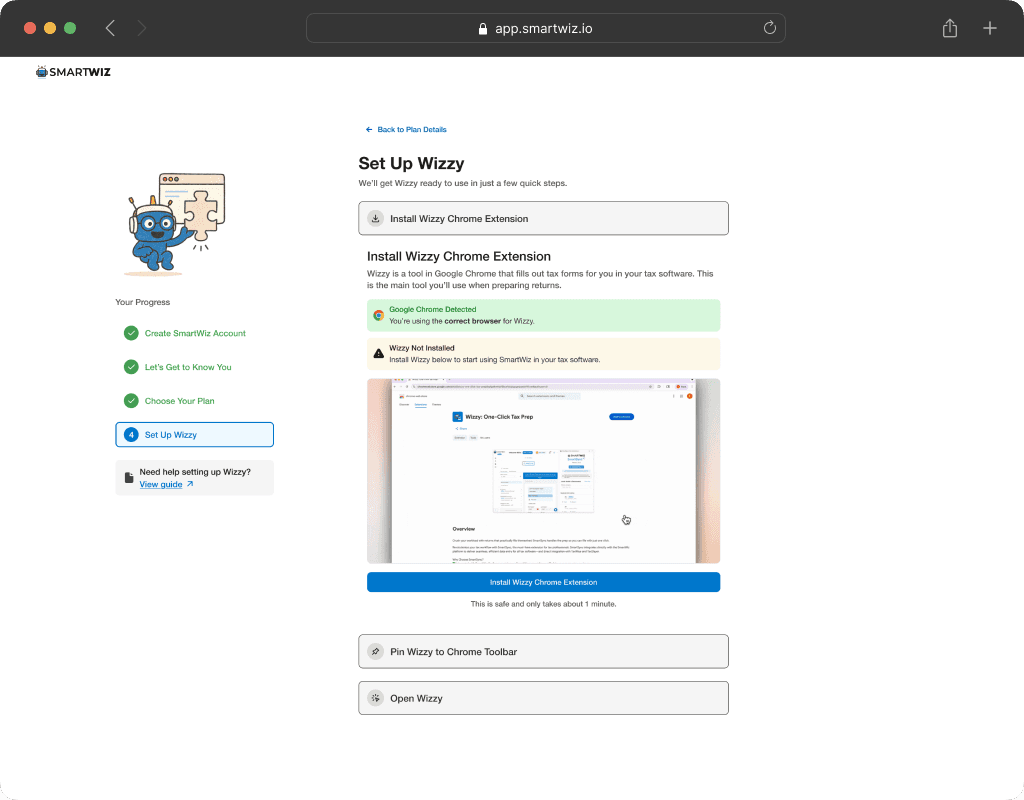
Integrated onboarding for a complete first experience
The existing onboarding introduced features one at a time, in separate flows. The result was users who knew how to use individual parts of the product but had no sense of how everything fit together.
How it will help Carol and Mark: For Carol, the integrated flow removes the questions of "how does this work again?" For Mark, it confirms early that this product is as capable as he was told. Neither user is left with gaps in their understanding.
Onboarding that didn't connect the dots
SOLUTION
Integrated onboarding for a complete first experience
The existing onboarding introduced features one at a time, in separate flows. The result was users who knew how to use individual parts of the product but had no sense of how everything fit together.
How it will help Carol and Mark: For Carol, the integrated flow removes the questions of "how does this work again?" For Mark, it confirms early that this product is as capable as he was told. Neither user is left with gaps in their understanding.
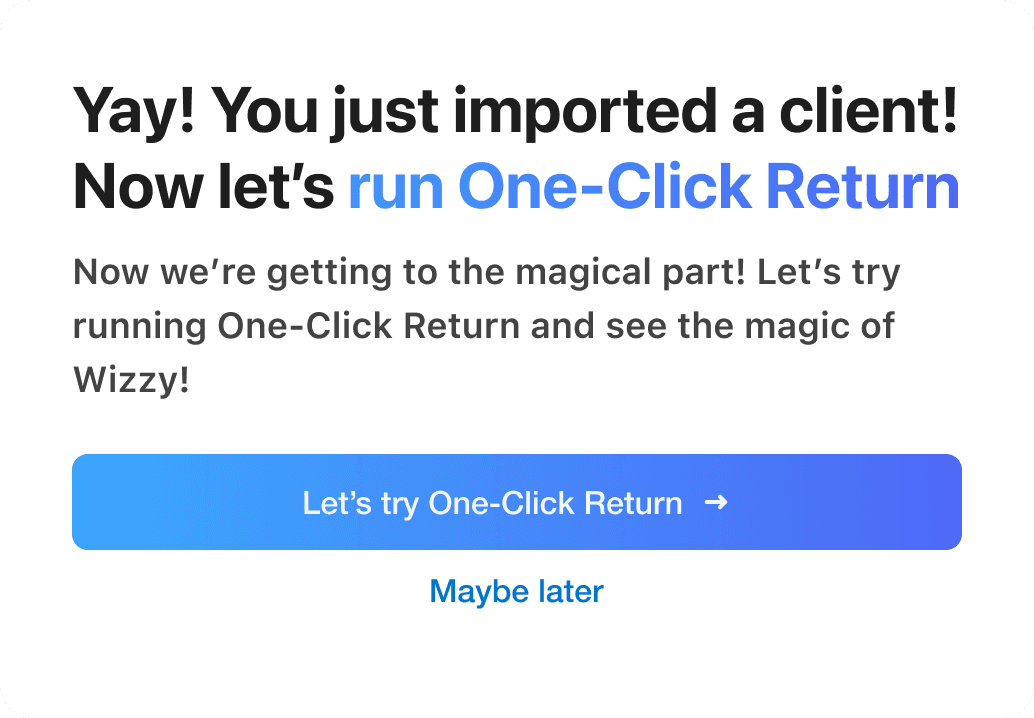
Disengaged before reaching the value
SOLUTION
Getting to the aha moment faster
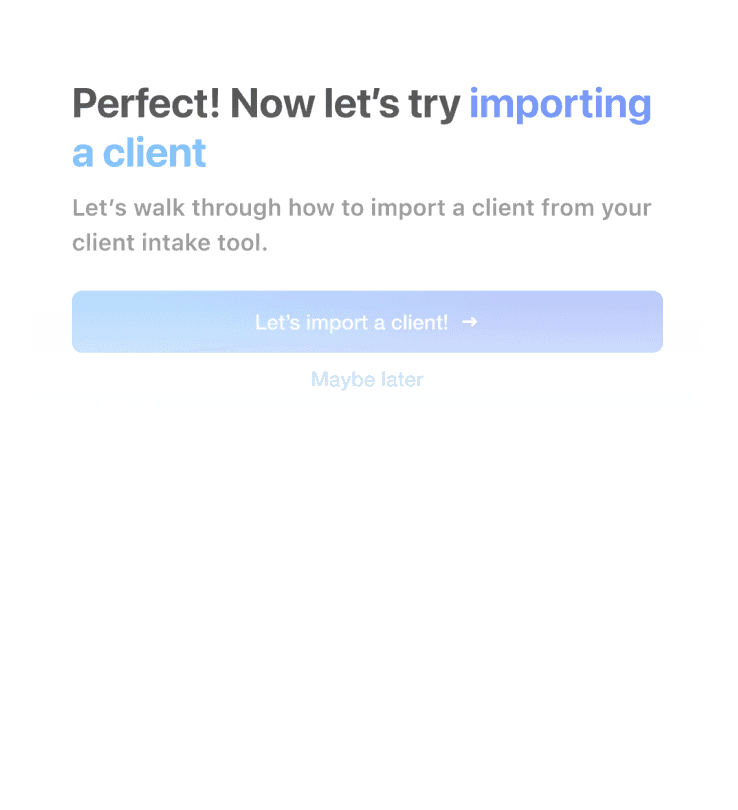
The flow was sequenced to surface the product's core value as early as possible so users experienced what SmartWiz could actually do for them before they had a chance to disengage. By the end of onboarding, users had completed the core task, not just filled out a profile.
How it will help Carol and Mark: Carol and Mark didn't need convincing, they needed proof. The product gave them that early, and trust followed.
Disengaged before reaching the value
SOLUTION
Getting to the aha moment faster
The flow was sequenced to surface the product's core value as early as possible so users experienced what SmartWiz could actually do for them before they had a chance to disengage. By the end of onboarding, users had completed the core task, not just filled out a profile.
How it will help Carol and Mark: Carol and Mark didn't need convincing, they needed proof. The product gave them that early, and trust followed.
Designing for the user who almost didn't stay
Designing for the user who almost didn't stay
View gallery

Results are In
The results were clear: a 30% lift in adoption and a noticeable drop in support tickets tied to onboarding confusion. For the first time, users were getting through setup without needing a hand to hold.
Results are In
The results were clear: a 30% lift in adoption and a noticeable drop in support tickets tied to onboarding confusion. For the first time, users were getting through setup without needing a hand to hold.

Design for Simplicity
Design for Simplicity
What I learned from this is users need simplicity and need signals that they're doing the right thing. Building that reassurance into the flow, rather than assuming users would figure it out, changed the outcome entirely.
Onboarding for a conservative user base forced a level of clarity and intentionality that benefited every user. When you design for the person most likely to leave, you create an experience strong enough to keep everyone.
It also reinforced something I carry into every project: the product working isn't enough. If users can't find their way in, everything built behind that door is invisible. Getting people through the front is part of the design problem too.
What I learned from this is users need simplicity and need signals that they're doing the right thing. Building that reassurance into the flow, rather than assuming users would figure it out, changed the outcome entirely.
Onboarding for a conservative user base forced a level of clarity and intentionality that benefited every user. When you design for the person most likely to leave, you create an experience strong enough to keep everyone.
It also reinforced something I carry into every project: the product working isn't enough. If users can't find their way in, everything built behind that door is invisible. Getting people through the front is part of the design problem too.
What's next
What's next
Budgetwise
Enhancing user experience by integrating AI for a budgeting app
FINTECH
B2C
MOBILE
Budgetwise
Enhancing user experience by integrating AI for a budgeting app
FINTECH
B2C
MOBILE
Miru
Designing a social app that tracks watchlist and connects communities
SOCIAL
B2C
MOBILE
Miru
Designing a social app that tracks watchlist and connects communities
SOCIAL
B2C
MOBILE