( SMARTWIZ )
Turning confused users into power users
Turning confused users into power users
I rebuilt the onboarding experience from the ground up, designing a guided first session that set expectations upfront, connected the dots between features, and got users to a real completed task before they had a chance to disengage.
Role: Product Designer
Platform: SaaS, Chrome Extension
Industry: FinTech

About SmartWiz
SmartWiz is an AI-powered tax preparation platform built to help tax professionals file faster and scale their practice.
( PROBLEM )
Users were logging in, getting stuck, and not coming back. The product had real value… but without a clear path in, it was invisible.
SmartWiz's user base skewed older and less tech-savvy. For them, a confusing first experience wasn't a minor inconvenience, it was a permanent last one. Support tickets were climbing. Adoption was low. And users weren't struggling with what SmartWiz did. They were struggling with where to begin.
( PROBLEM )
Users were logging in, getting stuck, and not coming back. The product had real value… but without a clear path in, it was invisible.
SmartWiz's user base skewed older and less tech-savvy. For them, a confusing first experience wasn't a minor inconvenience, it was a permanent last one. Support tickets were climbing. Adoption was low. And users weren't struggling with what SmartWiz did. They were struggling with where to begin.
( PROBLEM )
Users were logging in, getting stuck, and not coming back. The product had real value… but without a clear path in, it was invisible.
SmartWiz's user base skewed older and less tech-savvy. For them, a confusing first experience wasn't a minor inconvenience, it was a permanent last one. Support tickets were climbing. Adoption was low. And users weren't struggling with what SmartWiz did. They were struggling with where to begin.
( RESEARCH )
I conducted one-on-one check-ins with a cross-section of SmartWiz users who had dropped off after signup, specificalliy people who had logged in, gotten stuck, and quietly stopped coming back. The goal was to hear directly from the users the product was losing, not the ones who had figured it out.
Usage data pointed to a consistent pattern: users were dropping off in the first session, before ever reaching the product's core features. The interviews explained why.
( RESEARCH )
I conducted one-on-one check-ins with a cross-section of SmartWiz users who had dropped off after signup, specificalliy people who had logged in, gotten stuck, and quietly stopped coming back. The goal was to hear directly from the users the product was losing, not the ones who had figured it out.
Usage data pointed to a consistent pattern: users were dropping off in the first session, before ever reaching the product's core features. The interviews explained why.
( KEY FINDINGS )
( KEY FINDINGS )
#1: Users arrived finished signing up with no frame of reference. The product never answered the most basic question: what is this, and how does it work?
#1: Users arrived finished signing up with no frame of reference. The product never answered the most basic question: what is this, and how does it work?
#2: The existing onboarding introduced features one at a time, in separate flows, leaving users with no sense of how everything fit together.
#2: The existing onboarding introduced features one at a time, in separate flows, leaving users with no sense of how everything fit together.

#3: Most users never reached the moment where SmartWiz clicked. They dropped off before seeing the real value.
#3: Most users never reached the moment where SmartWiz clicked. They dropped off before seeing the real value.
#1: Users arrived finished signing up with no frame of reference. The product never answered the most basic question: what is this, and how does it work?
#2: The existing onboarding introduced features one at a time, in separate flows, leaving users with no sense of how everything fit together.
#3: Most users never reached the moment where SmartWiz clicked. They dropped off before seeing the real value.
( HOW MIGHT WE )
How might we get a less tech-savvy user to their first successful filing before confusion sets in?
These additional questions helped drive the design:
How might we set accurate expectations / educate before users touch a single feature?
How might we show how the product works as a whole, not just feature by feature?
How might we get users to a real win within their very first session?
( HOW MIGHT WE )
How might we get a less tech-savvy user to their first successful filing before confusion sets in?
These additional questions helped drive the design:
How might we set accurate expectations / educate before users touch a single feature?
How might we show how the product works as a whole, not just feature by feature?
How might we get users to a real win within their very first session?
( THE SOLUTION )
I rebuilt onboarding as a single, guided experience built around three ideas: context first, connection second, completion third.
( THE SOLUTION )
I rebuilt onboarding as a single, guided experience built around three ideas: context first, connection second, completion third.
Setting expectations before anything else
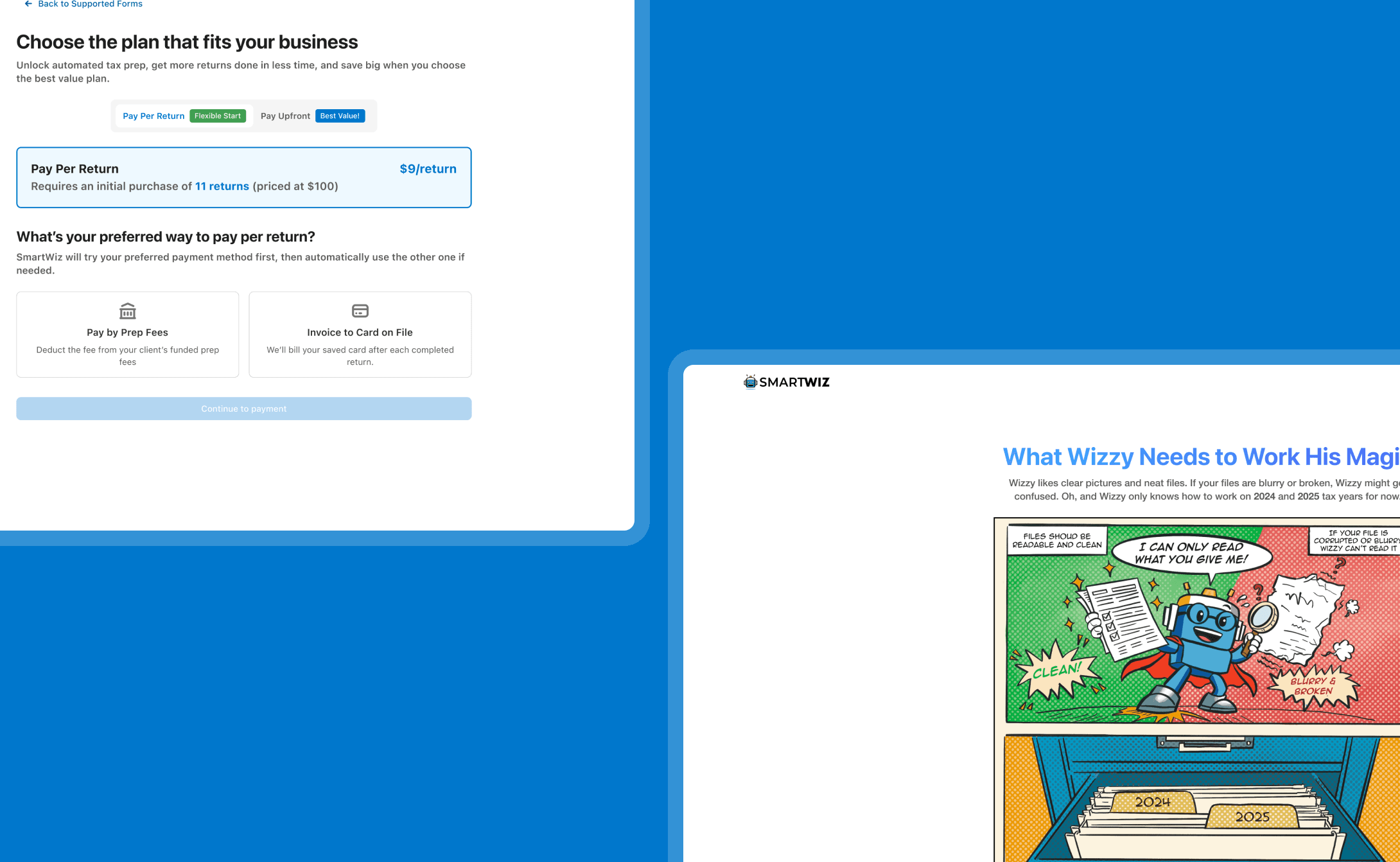
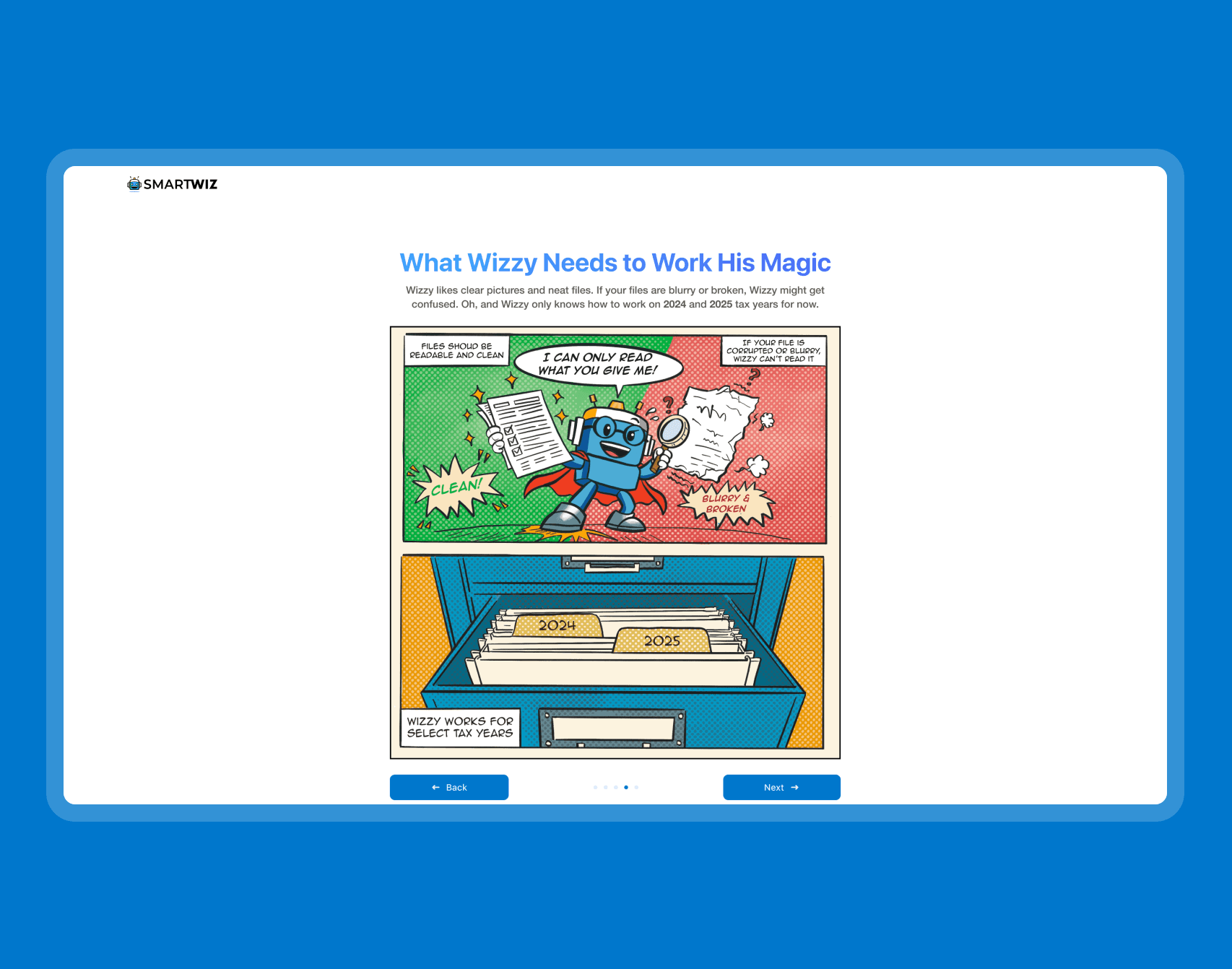
Before users touched a single feature, a short comic strip sequence walked them through what SmartWiz does and just as importantly, what it doesn't. Plain language, simple illustration, no tech jargon.
A comic strip format was chosen deliberately over a traditional feature walkthrough or tooltip tour. For a user base that found dense interfaces intimidating, a visual story was a far lower-stakes entry point.
Setting expectations before anything else
Before users touched a single feature, a short comic strip sequence walked them through what SmartWiz does and just as importantly, what it doesn't. Plain language, simple illustration, no tech jargon.
A comic strip format was chosen deliberately over a traditional feature walkthrough or tooltip tour. For a user base that found dense interfaces intimidating, a visual story was a far lower-stakes entry point.
One step at a time, no detours
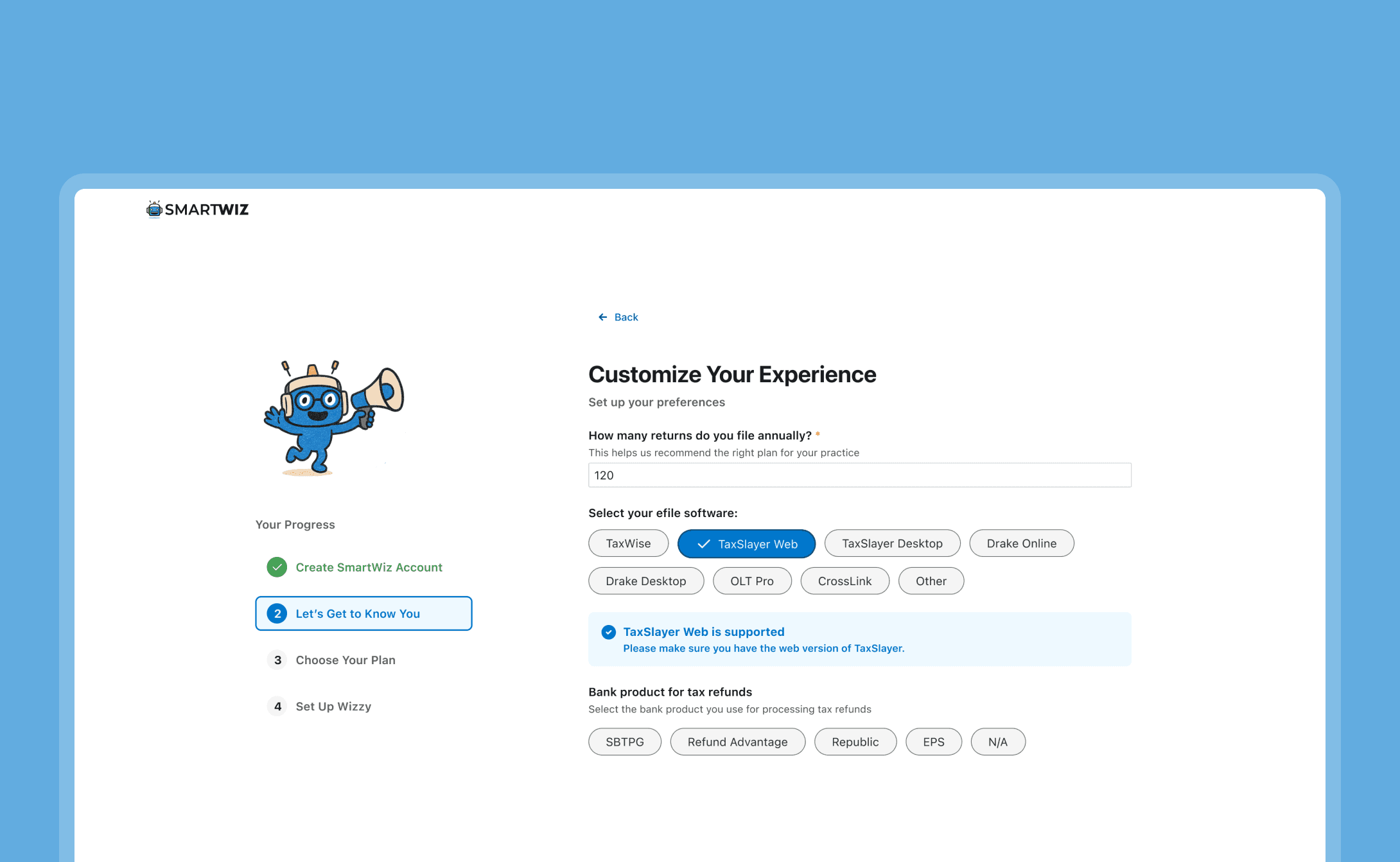
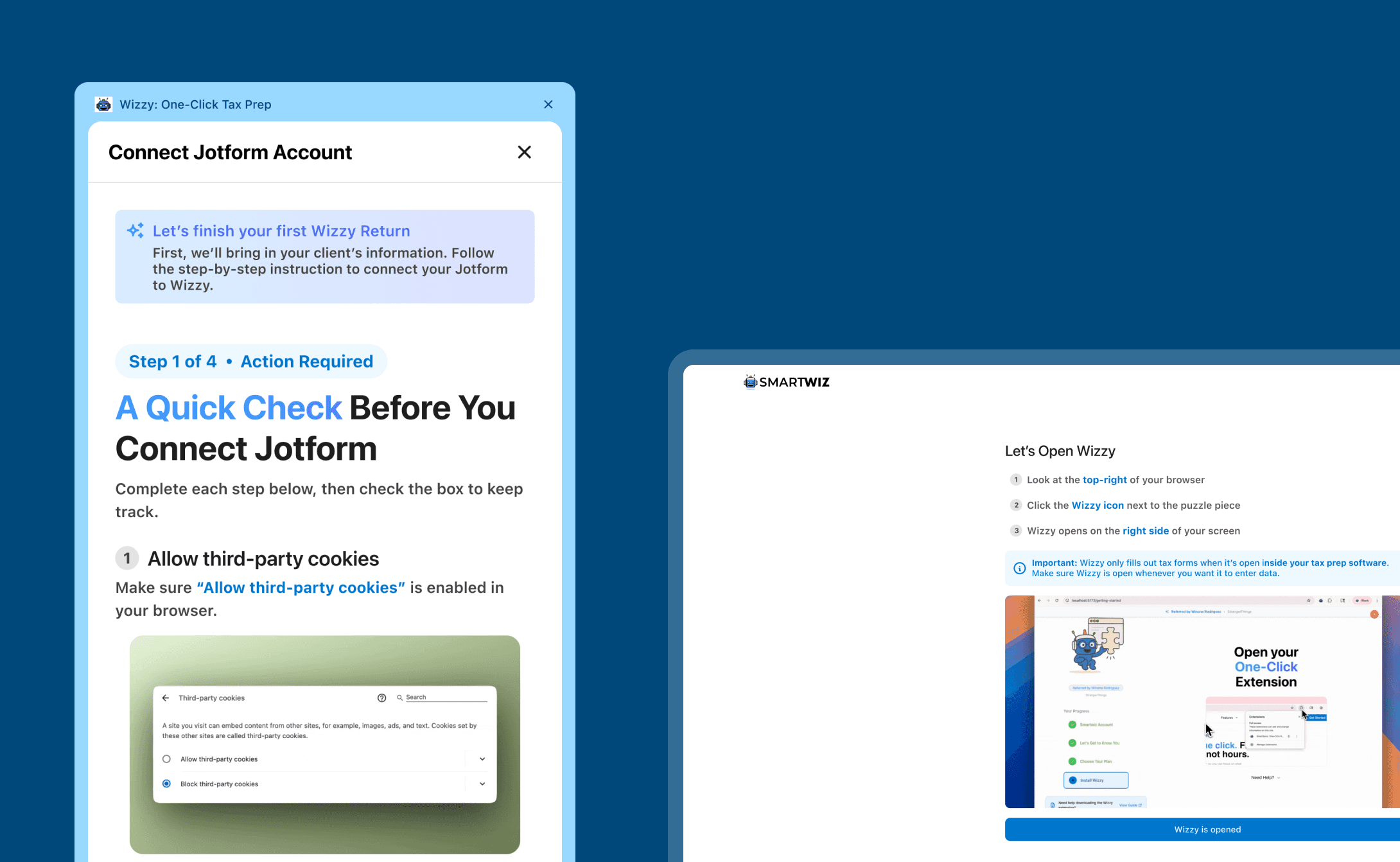
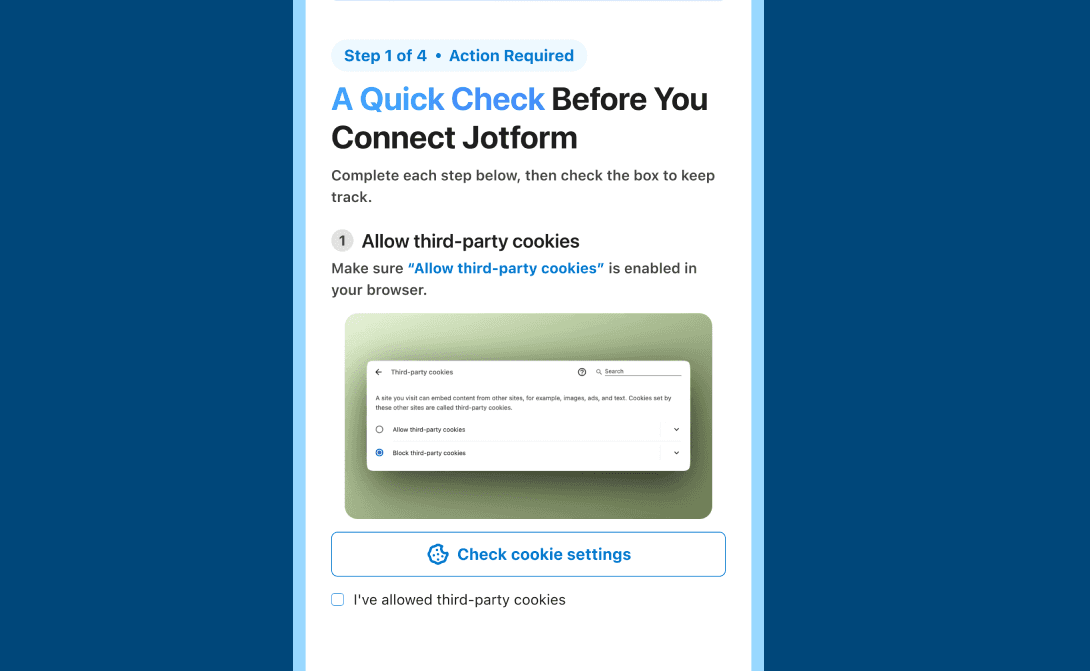
Every screen in the onboarding flow was scoped to a single action. No competing CTAs, no optional paths branching off mid-flow, no "skip for now" decisions that created gaps in understanding later.
The single-action-per-screen constraint was a direct response to what the research revealed — users weren't failing because the steps were hard. They were failing because there were too many things to look at at once. Reducing each screen to one clear next step removed the paralysis.
A connected first experience
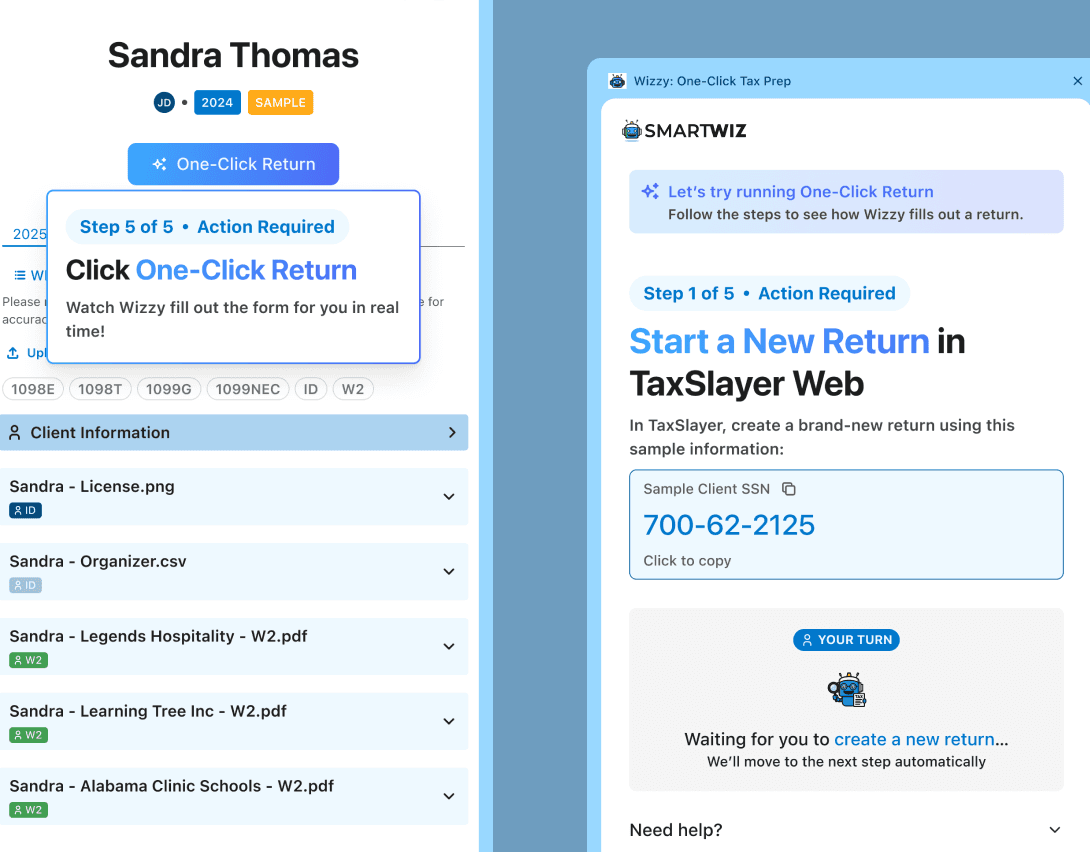
The flow was sequenced to mirror a real tax prep session, the same order a preparer would actually move through the product on the job.
This meant users weren't just learning features in the abstract. They were learning them in context. By the time onboarding ended, they'd completed a task that reflected real work.
A connected first experience
The flow was sequenced to mirror a real tax prep session, the same order a preparer would actually move through the product on the job.
This meant users weren't just learning features in the abstract. They were learning them in context. By the time onboarding ended, they'd completed a task that reflected real work.
( THE SOLUTION )
I rebuilt onboarding as a single, guided experience built around three ideas: context first, connection second, completion third.
Setting expectations before anything else
Before users touched a single feature, a short comic strip sequence walked them through what SmartWiz does and just as importantly, what it doesn't. Plain language, simple illustration, no tech jargon.
A comic strip format was chosen deliberately over a traditional feature walkthrough or tooltip tour. For a user base that found dense interfaces intimidating, a visual story was a far lower-stakes entry point.
One step at a time, no detours
Every screen in the onboarding flow was scoped to a single action. No competing CTAs, no optional paths branching off mid-flow, no "skip for now" decisions that created gaps in understanding later.
The single-action-per-screen constraint was a direct response to what the research revealed — users weren't failing because the steps were hard. They were failing because there were too many things to look at at once. Reducing each screen to one clear next step removed the paralysis.
A connected first experience
The flow was sequenced to mirror a real tax prep session, the same order a preparer would actually move through the product on the job.
This meant users weren't just learning features in the abstract. They were learning them in context. By the time onboarding ended, they'd completed a task that reflected real work.
( WHAT'S NEXT )
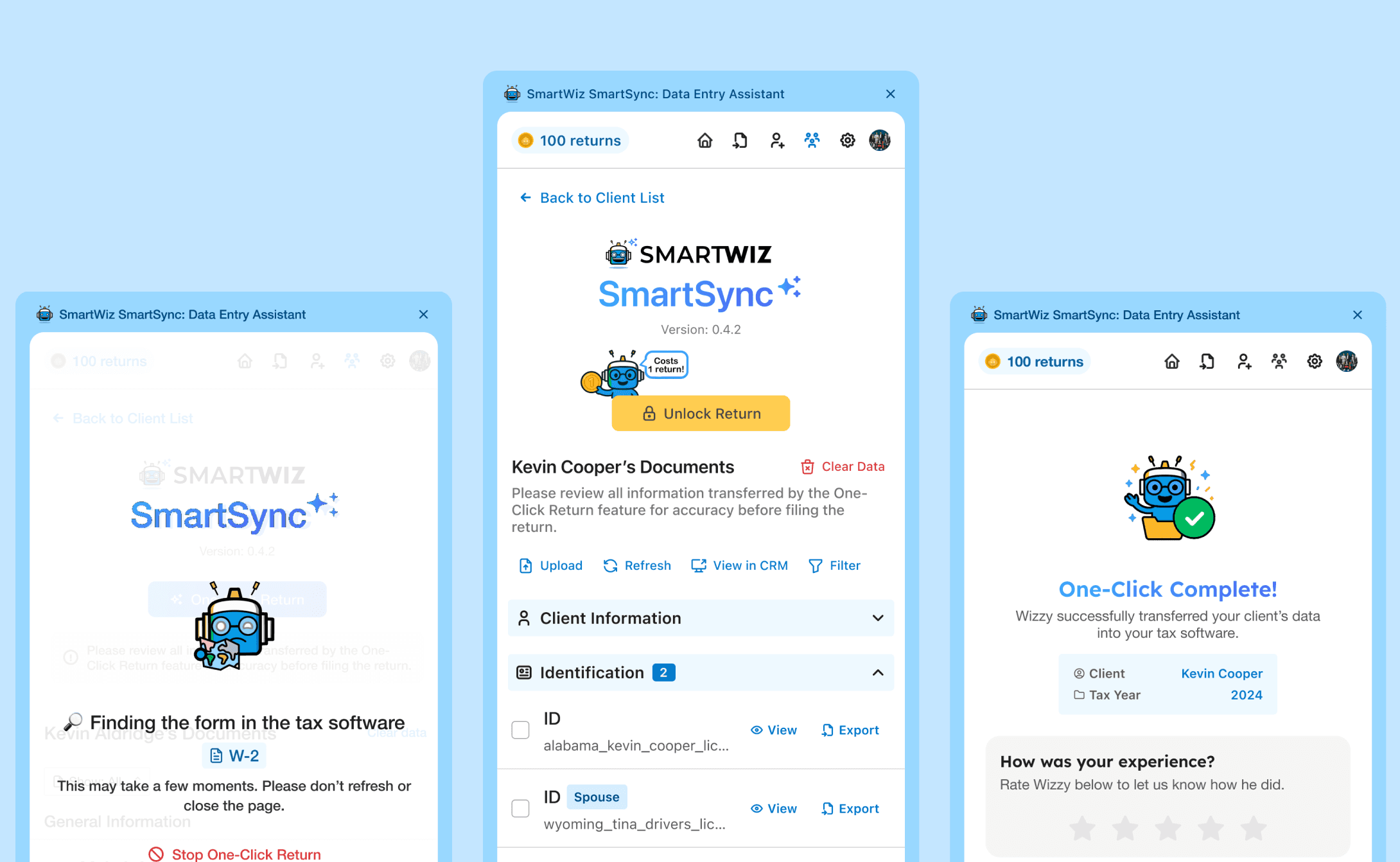
Simplifying tax filing into a one-click moment
Simplifying tax filing into a one-click moment
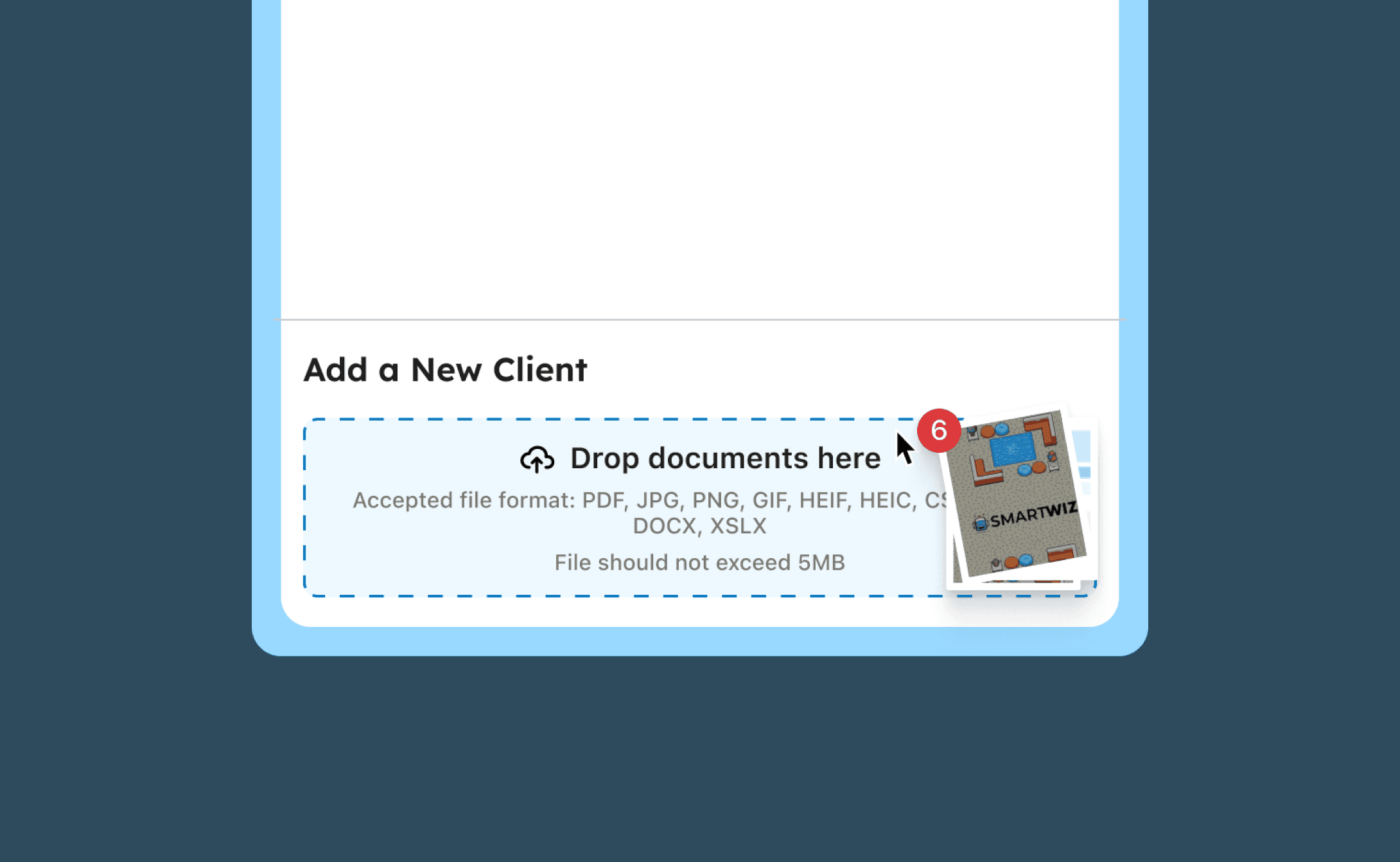
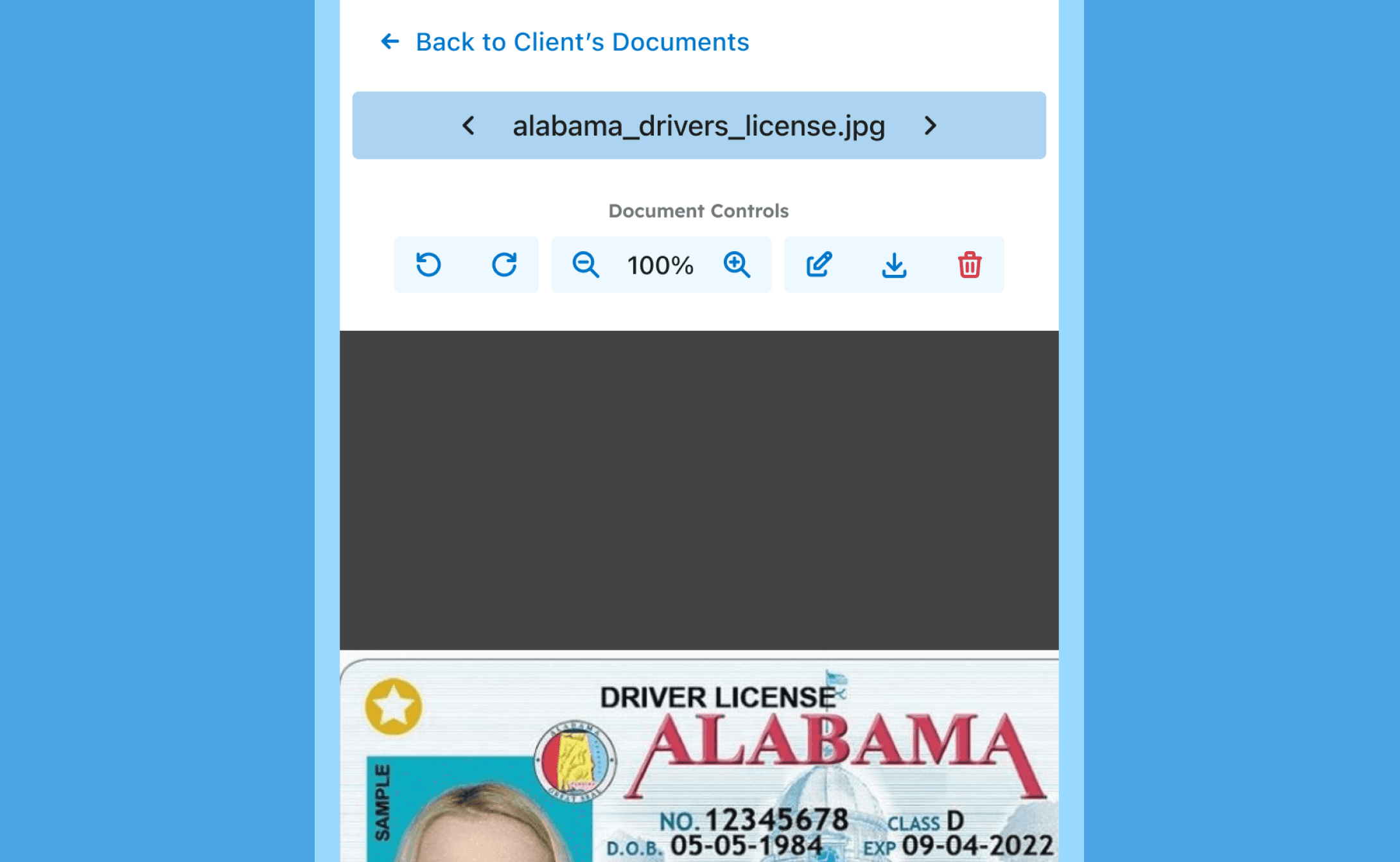
SmartWiz helps tax professionals file faster and take on more clients by eliminating manual data entry. I designed a Chrome extension that integrates directly with their existing tax software so preparers can move from client data to filed return without ever leaving their workflow.